The course explains the principles of Physical AI clearly and brings them to life through hands-on simulator experience.
Alon WeinbergCisco Investments and M&A, Israel

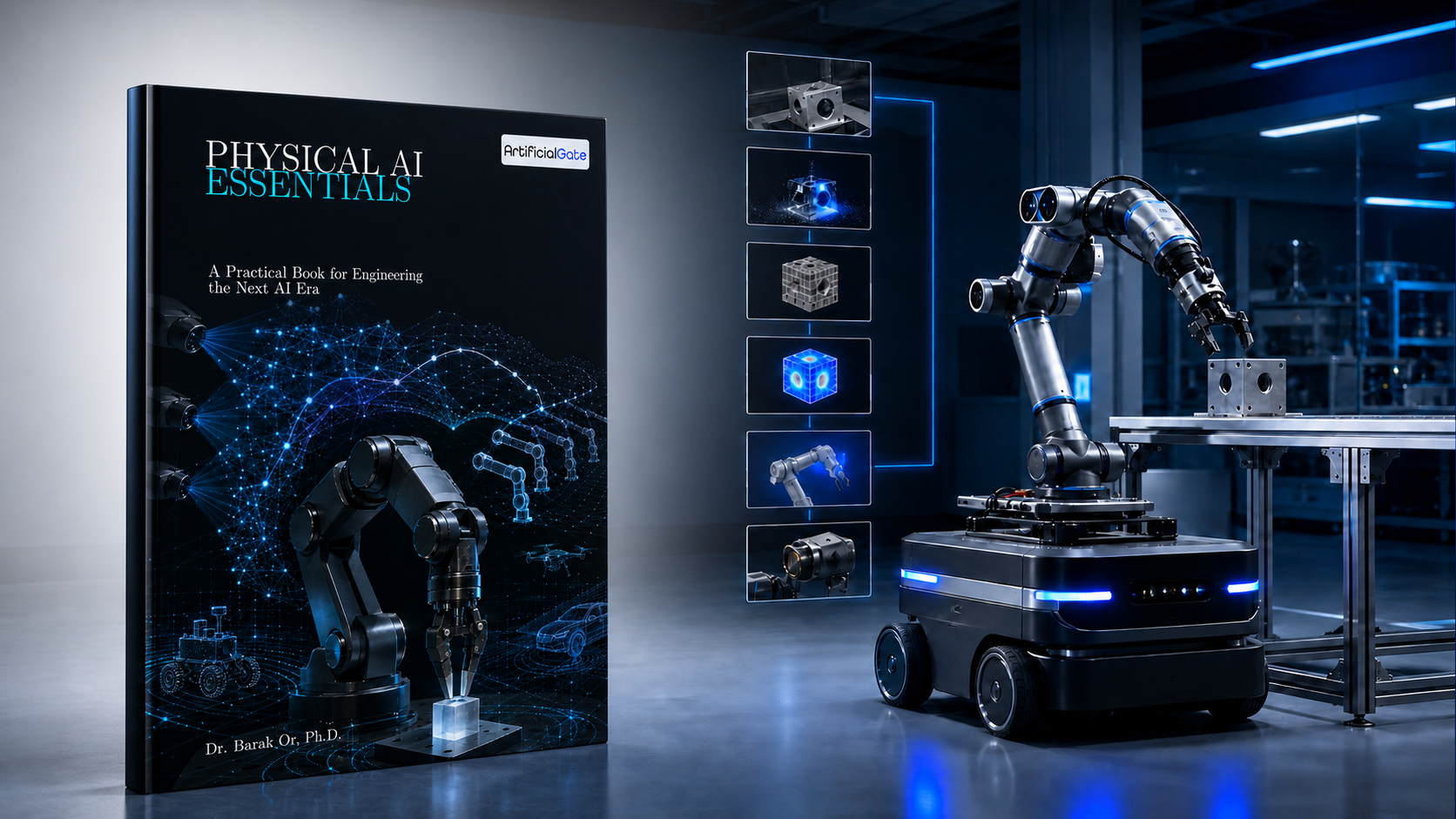
16 short videos, 3 interactive laboratories and 3 readiness quizzes. Labs are open to everyone; sign in for free access to videos and course materials.
The course and certificate are free. Register, complete all lessons and pass all course quizzes to earn your certificate. Laboratory marks in the course are completion records, not an independent assessment of engineering competence.
Training a team? Build a tailored program
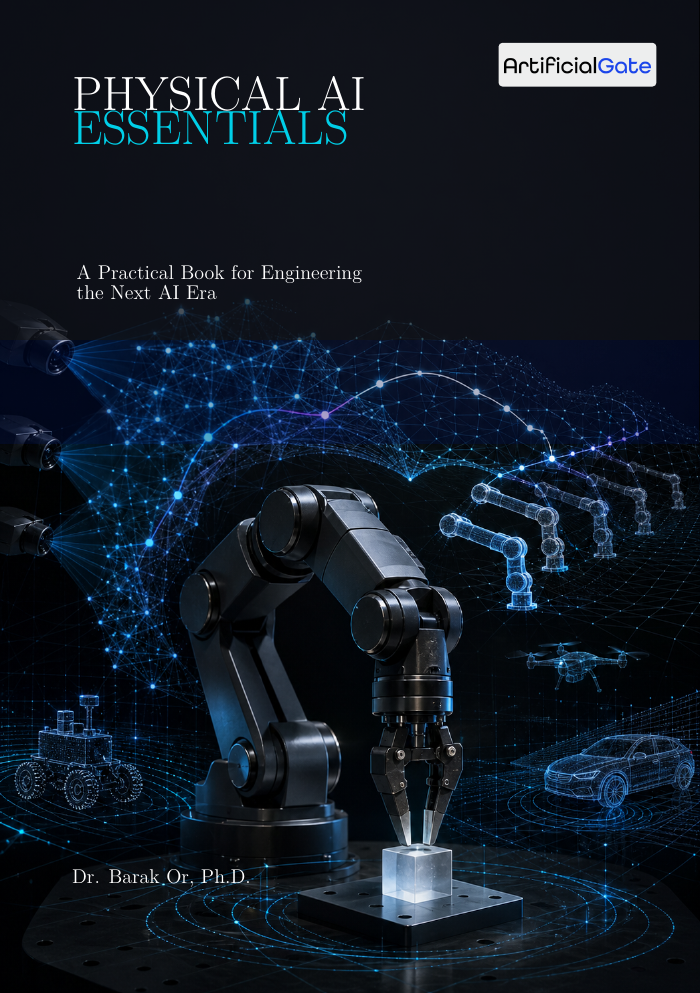
The complete book used throughout this course. Download the PDF for free. No sign-in or course registration required.
The first course in the Physical AI learning path. It focuses on the foundations: the Physical AI stack, the physical interface, and learning from demonstrations. Public laboratories 1-3 are available to everyone; register for free to access all videos and course materials.
The course explains the principles of Physical AI clearly and brings them to life through hands-on simulator experience.
The course teaches Physical AI principles clearly through simulator-based practice that connects engineering intuition with implementation.
An impressively comprehensive syllabus, spanning everything from kinematics and control to cutting-edge World Action Models. A great resource for anyone exploring Physical AI!
The course explains the principles of Physical AI clearly and brings them to life through hands-on simulator experience.
The course teaches Physical AI principles clearly through simulator-based practice that connects engineering intuition with implementation.
An impressively comprehensive syllabus, spanning everything from kinematics and control to cutting-edge World Action Models. A great resource for anyone exploring Physical AI!
